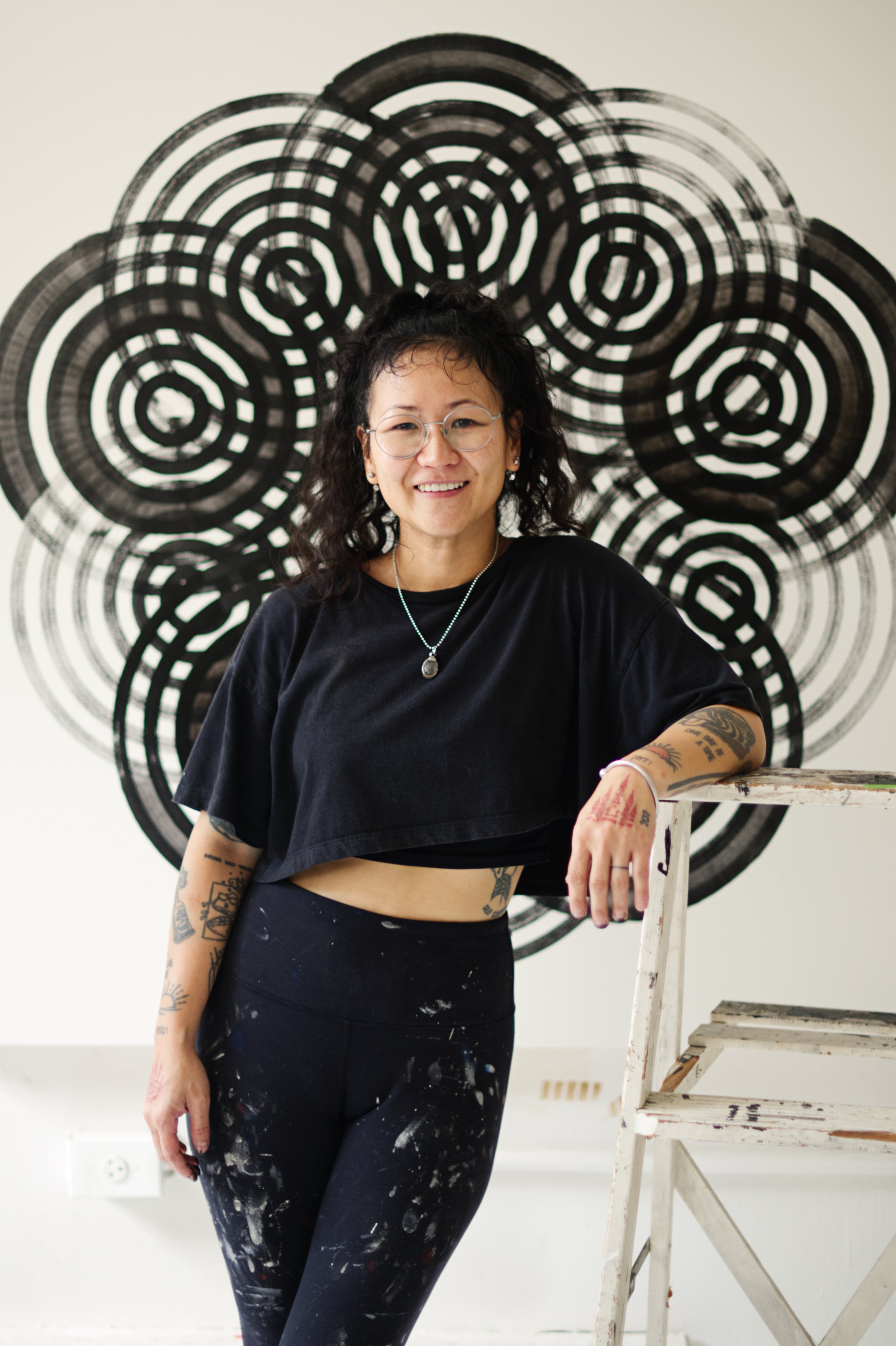
Emon Surakitkoson
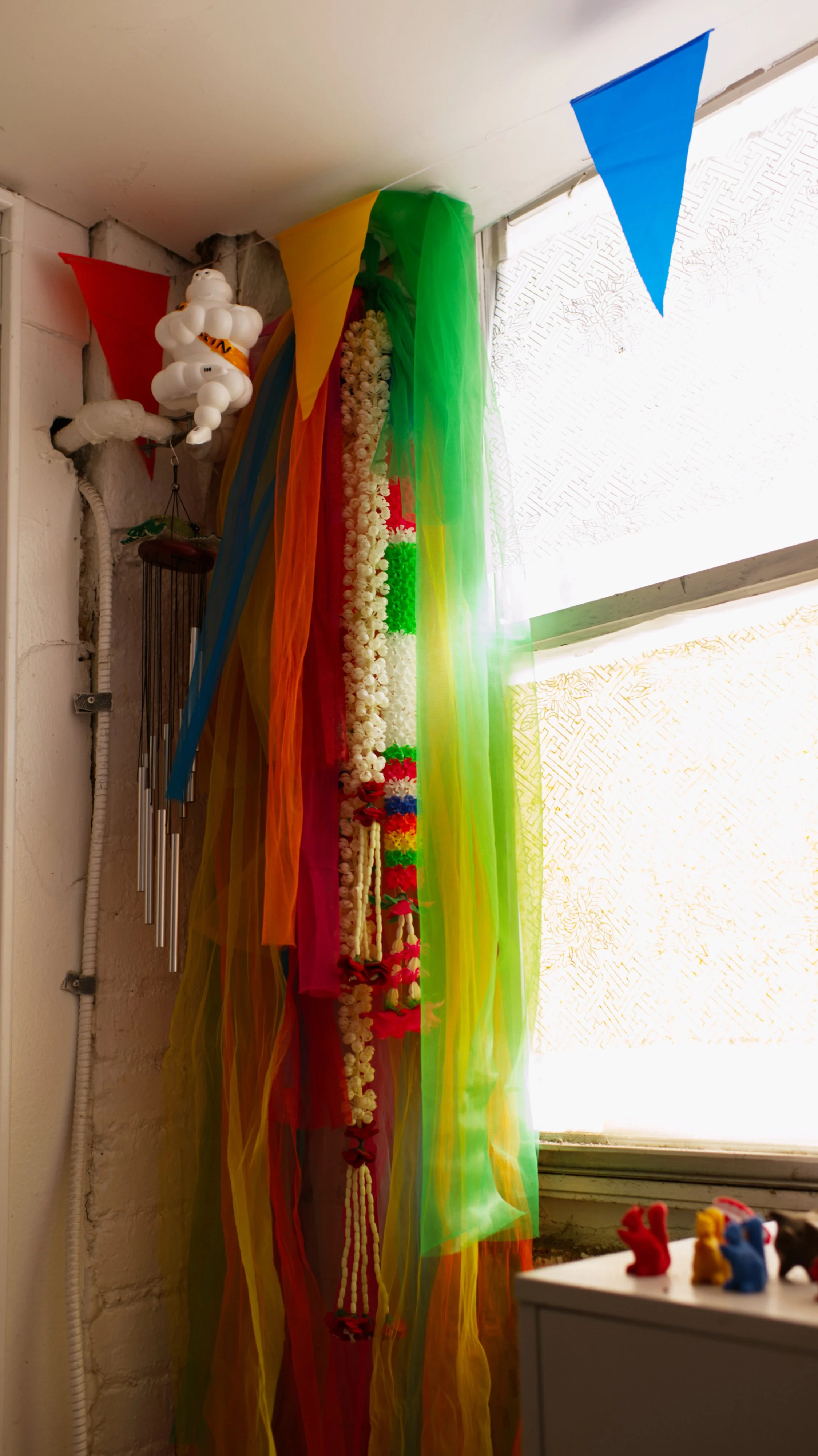
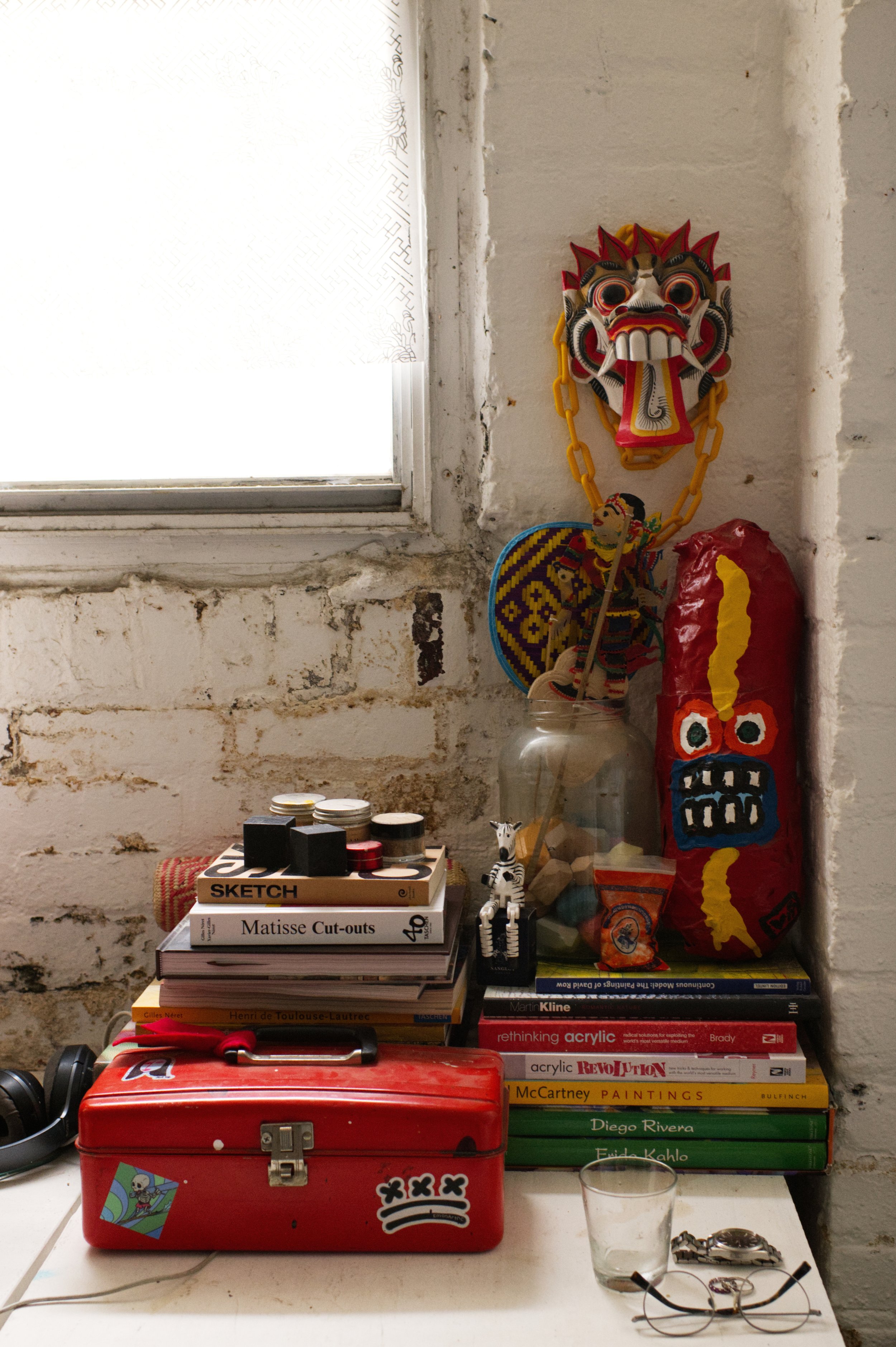
Swooping geometric patterns fill the wall of a lower level studio in DC. Light filters through tattoo-patterned translucent papers hung on the windows to block out prying eyes, swaths of colorful fabric and floral garlands hang from one corner, and pennant banners drape from the ceiling.
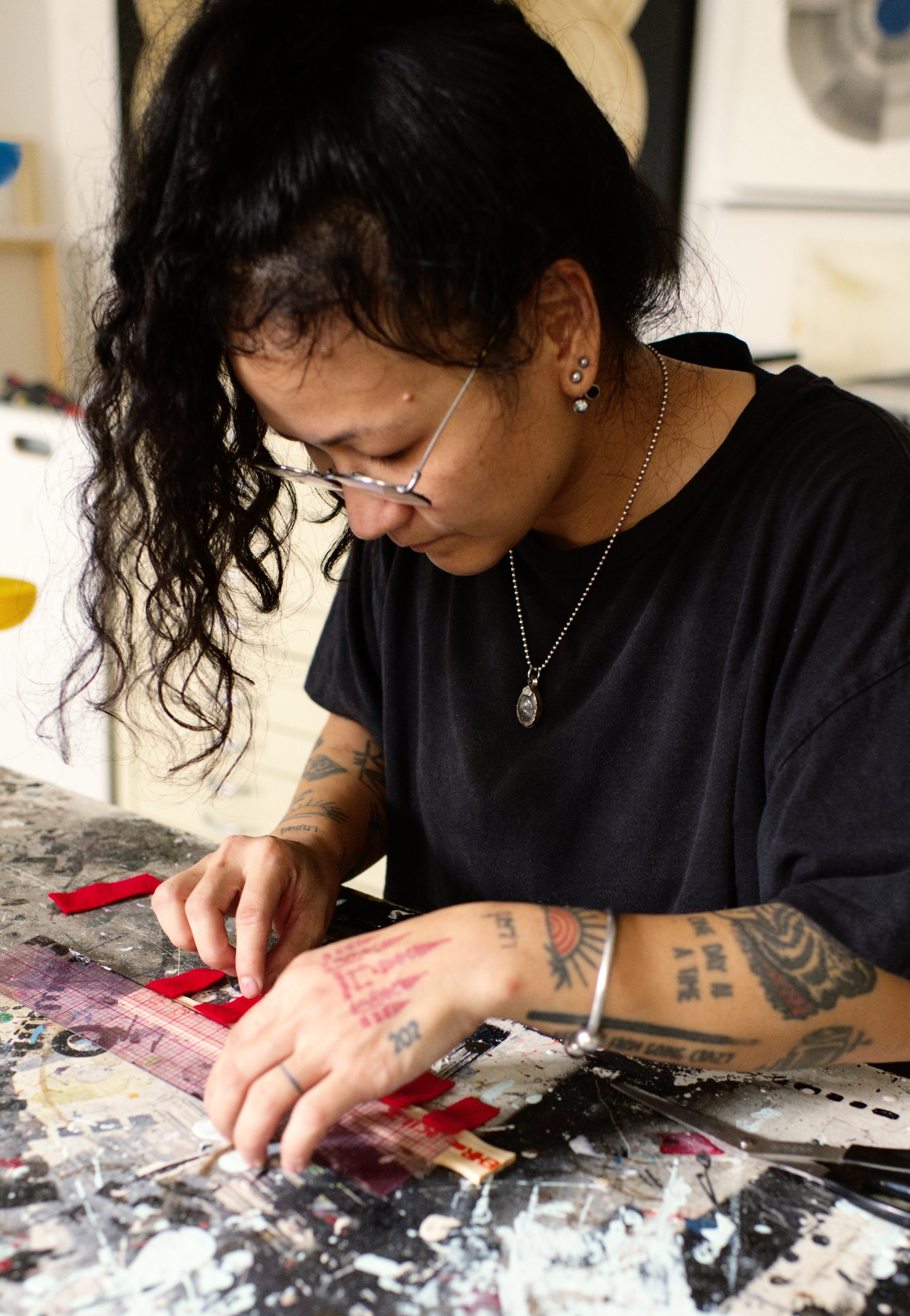
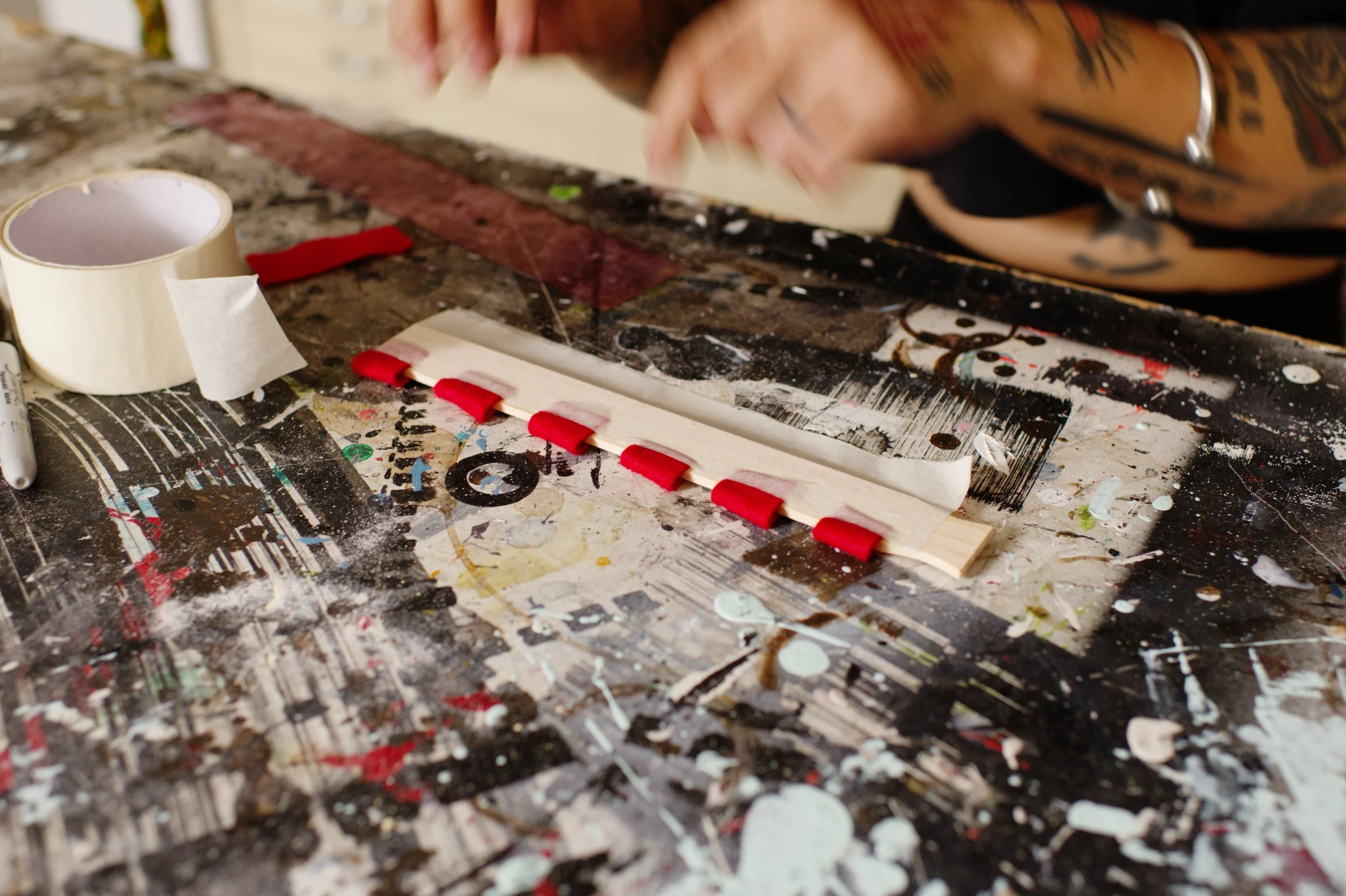
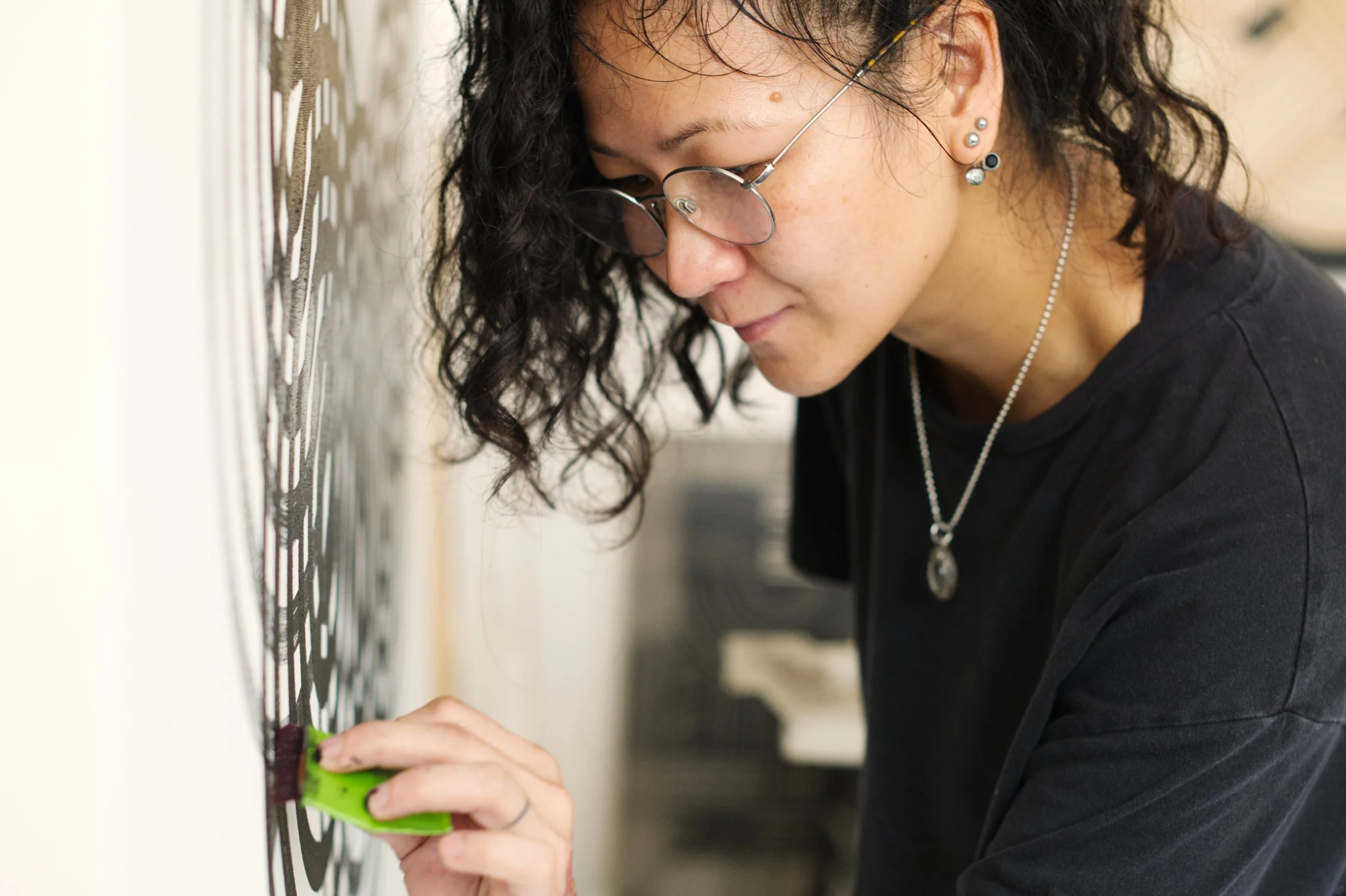
Emon sits at a paint covered work table cutting strips of red fabric and aligning them with a ruler along a paint stick she cut with a table saw. “When I started painting, I knew I wanted to paint large and I wanted to paint fast. So I created these handmade brushes because I didn’t have money to go out and buy all these big brushes.” She tears a strip of tape and adheres the fabric to the stick before flipping it over; curling the fabric up the other side. “It’s become essential for the practice because I know if I use this tool it’s literally coming out from me, from my idea and what I create.”
At 19, Emon traveled from Thailand to the United States. She worked in the food and hospitality industry for more than a decade before turning to art. As an immigrant she grappled with her identity while living between cultures. “When I first moved here, I just never felt like I fit in. And I still don’t feel that I fit in. Over time I realized I shouldn’t see myself as different because if I see myself as different I always have to try to fit in. I need to see myself as what I am, as someone in between. It’s important to have spaces for people like this because we are always involved. As humans we migrate and move to different locations, and it doesn’t make the person good or bad it’s just how this planet works.”
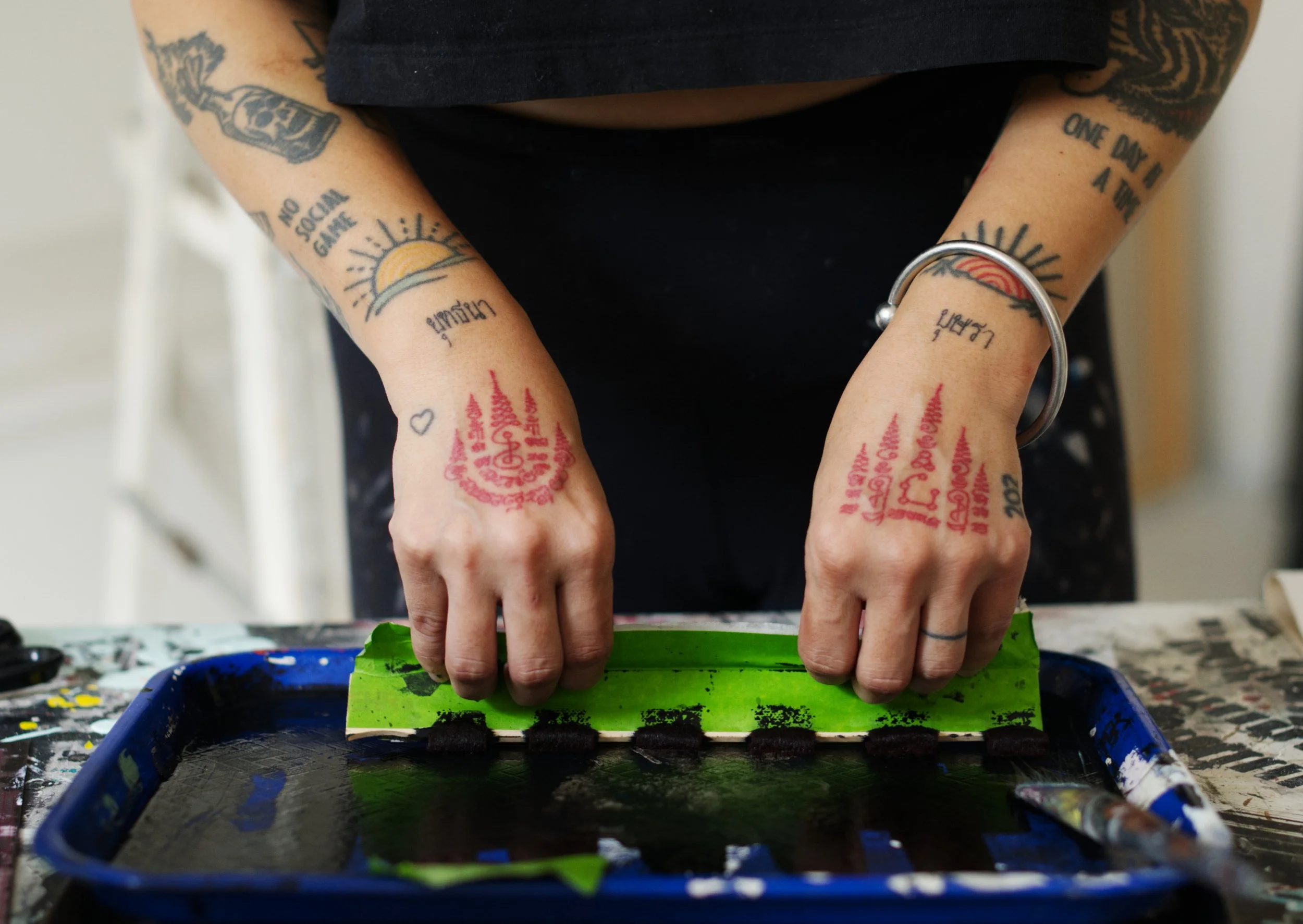
After securing the fabric in place, Emon pours black paint onto an old lunch tray and carefully runs the brush through the paint, makes a test pull, then starts on the canvas at the other side of the room.
“When I first wanted to be an artist I asked myself, ‘I didn’t go to school [for art], how am I gonna be an artist?’ I said, ‘I’m just gonna keep painting. If I make 10 of them, I make 20 of them, I make a hundred of them, eventually people will see me as an artist, and they can’t deny that I’m an artist because I’ve been making art for so long.’ It’s a choice that I make. I want to be creative. I want to be an artist.”
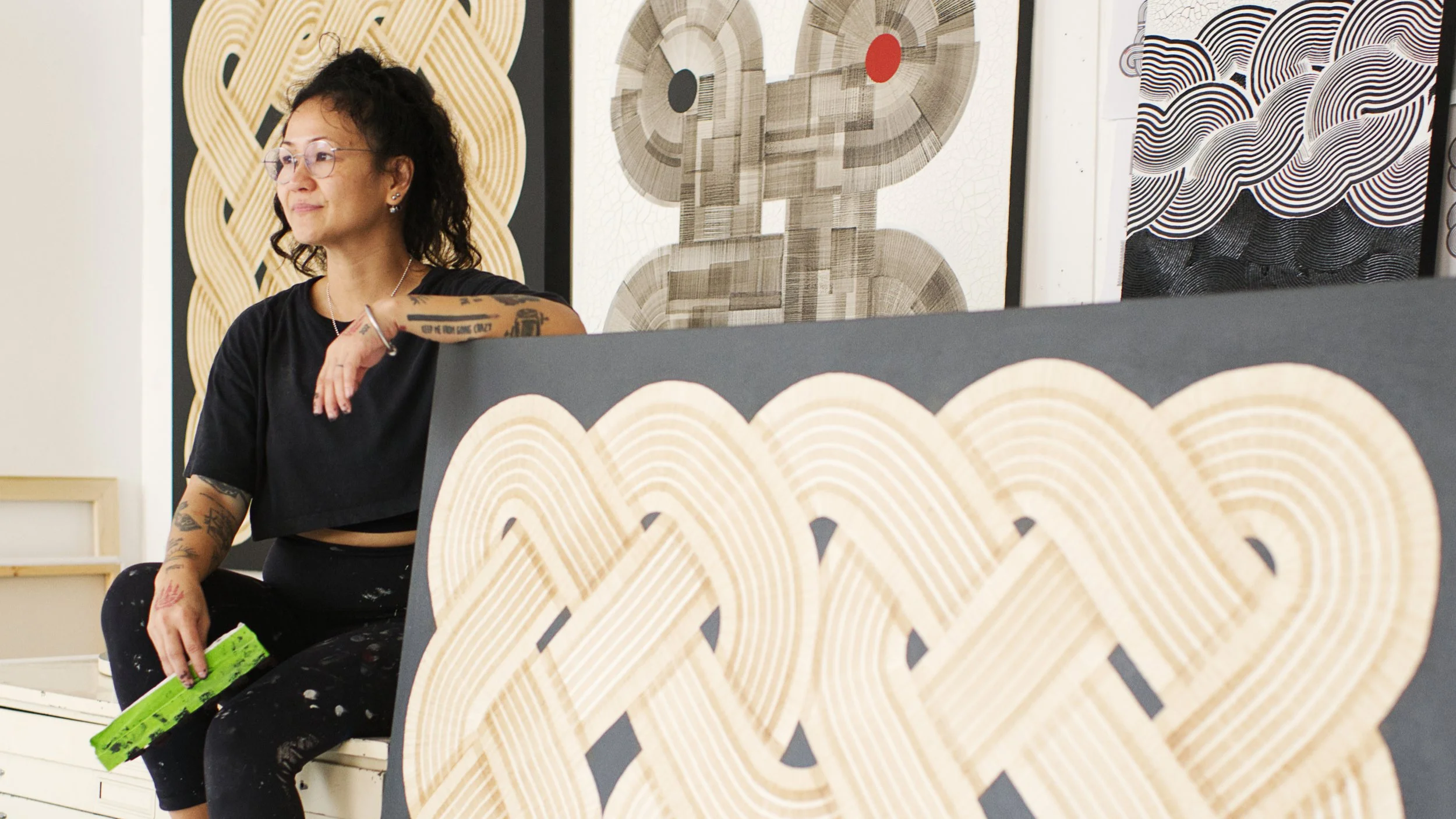
Emon’s work is abstract. Undulating lines determined by the width of her brush weave their way in and out of each another in geometric patterns that feel both mathematical and intuitive. Symmetry plays a role, but the hand-made nature of the brush creates variance in the lines that keep the work from becoming repetitive or predictable.
“The way that I practice really brings me back to the meditation process, you know. Going out into society and having to try to figure it out and be present with everything has gotten to me, but when I’m in the studio, I come in, I close the door and make my brush. I choose the composition and go do a repetitive process all day. It’s just so peaceful ‘cause I don’t really think about anything else… I practice that way, and I hope when people see it, it will give them that balance.”
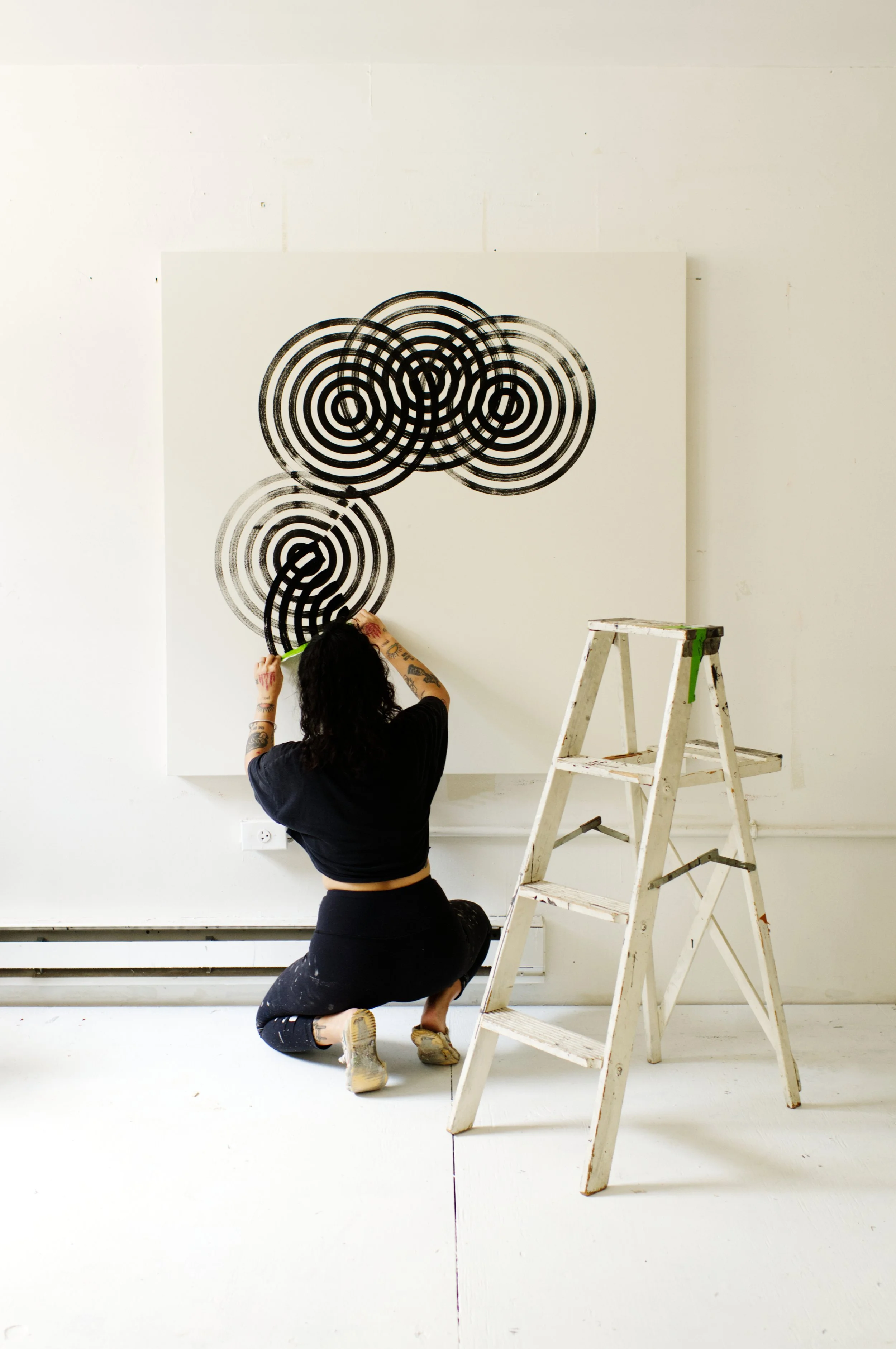
As Emon works, she rotates her brush creating interlocking circles that invite a kind of infinite looping of the eye. The viewer can get lost infinitely traveling from one line to the next, and while the work is visually abstract, Emon uses her curative eye to go deeper into themes of immigration, culture, and community.
“I grew up with a lot of structure. We knew that we had to grow up and represent our family, our last name, our town, our city, right? Our country, our part of the world as Asian. So I never really saw myself as an individual or made something that identified with me particularly. The story that I’m trying to tell is that I’m involved with all these things. When I talk about art I want to talk about my own experience as an immigrant, and I want to talk about the culture; how we live in a sense of community.”
There’s finished works are quiet but striking: huge monochromatic lattices, some with pops of color but mostly black and white. Emon adds the finishing touches with a smaller handmade brush, filling in some of the arches of the piece in front of her.
“I want to make work that stands on its own but gets along with the surroundings because I want people to hear me…. If I’m [yelling], people wont hear me at all so the conversation will never happen, but when we have a conversation we can go somewhere.”